Cutting Labour Hours in the Dairy Aisle with Better Milk Trolley Design
The dairy aisle is often the busiest part of a supermarket. It is also a major bottleneck for staff. Milk is heavy, bulky, and sells quickly. Consequently, staff must restock these shelves constantly throughout the day. In many stores, this process is slow and physically demanding. However, the right equipment changes the entire dynamic. By focusing on better milk trolley design, retailers can significantly reduce labour hours. This shift improves store flow and allows staff to focus on other important tasks.
The Hidden Cost of Manual Handling
Many retailers still rely on outdated methods for stocking milk. Workers often move crates by hand or use flatbed trolleys that are not fit for the task. This leads to several issues. First, it is incredibly slow. Moving four or five two-pint bottles at a time takes a long time. Second, it is physically draining. Lifting heavy crates repeatedly leads to fatigue and potential back injuries.
When staff are tired, they work slower. They are also more likely to make mistakes or drop products. These small delays and accidents add up over a week. Therefore, the labour cost of stocking the dairy aisle is often much higher than managers realise. A better milk trolley design addresses these costs directly. It turns a difficult task into a streamlined process.
Design Feature: The Power of Manoeuvrability
A milk trolley must be easy to move. This sounds simple, but it is often overlooked. Supermarket aisles are narrow and frequently crowded with customers. A trolley that is difficult to steer becomes a hazard. It also slows the worker down. If a staff member has to struggle with a seized wheel, they are wasting time.
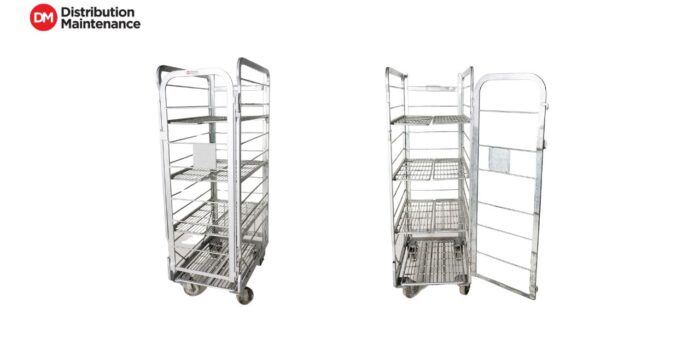
Our new milk trolley features high-quality, smooth-rolling castors. These wheels are designed to handle the heavy weight of a full load of milk. Furthermore, they provide excellent manoeuvrability. Staff can navigate tight corners and busy aisles without breaking their stride. This ease of movement reduces the physical effort required. As a result, staff can move more stock in less time. They also arrive at the shelf with more energy to complete the task.
Direct-to-Shelf Efficiency
The most efficient way to stock milk is to remove as many steps as possible. Traditionally, milk moves from a delivery truck to a warehouse, then to a trolley, and finally to the shelf. Each “touch” takes time.
A well-designed milk trolley allows for a “wheel-in” approach. The trolley acts as the shelf itself in many modern store layouts. Instead of unloading bottles one by one, the worker simply wheels the full trolley into a dedicated space in the chiller. This eliminates the need for manual stacking entirely.
Even in stores that still use traditional shelving, a good trolley helps. It holds the crates at the correct height, reducing the need for the worker to bend down. This ergonomic advantage speeds up the process. Consequently, the time spent in the aisle is halved. This keeps the aisles clear for customers, which improves the shopping experience.
Surviving the Cold Chain
Milk trolleys spend a lot of time in cold environments. They move from refrigerated lorries to cold stores and then into chilled aisles. This constant temperature change is hard on equipment. Moisture can cause rust, and cold can make some materials brittle.
We build our trolleys from high-quality durable mild steel construction. This material is perfect for the cold chain and unlike plastic alternatives, steel does not crack under pressure or in freezing temperatures.
Furthermore, a steel trolley is easy to clean. Hygiene is vital in the dairy industry. Spilt milk can lead to odours and bacteria if not cleaned quickly. Because our trolleys are non-porous, they can be pressure-washed in seconds. This ensures the equipment remains compliant with food safety standards. It also ensures the trolley looks professional on the shop floor.
Space Saving with Nesting Features
Space in the back-of-house is always at a premium. When trolleys are not in use, they can quickly clutter up delivery bays and corridors. This creates a safety risk and slows down other deliveries.
Better trolley design includes smart storage solutions. Our milk trolleys are designed to nest or fold when empty. This means you can store ten empty trolleys in the space usually taken by three.
This space-saving feature is a massive benefit for smaller stores. It allows them to keep a larger fleet of trolleys on-site without blocking fire exits or walkways. Therefore, when a large delivery arrives, the staff have the equipment they need ready to go. They don’t have to waste time moving empty “clutter” out of the way first.
Reducing Product Damage
Milk bottles are surprisingly fragile when moved in bulk. If a trolley is unstable or vibrates too much, bottles can leak or crack. A single leaking bottle can ruin an entire crate of stock. It also creates a slip hazard on the floor.
A stable trolley design prevents this. Our trolleys feature reinforced bases and secure side rails. This keeps the load steady, even when moving over uneven surfaces or door thresholds. By reducing product damage, the trolley saves the business money twice. First, it prevents stock loss. Second, it eliminates the labour time needed to clean up spills and process returns.
The Role of Maintenance and Repair
Even the best-designed trolley needs care. In a busy retail environment, equipment is pushed to its limit every day. A trolley might get hit by a pallet truck or caught in a lift door. This is why our repair services are so important.
A trolley with a bent frame or a broken castor is a liability. It is harder to move and dangerous to use. Instead of ignoring the problem, retailers should take advantage of our on-site or drop-off repair services. We can replace castors, fix hinges, and straighten frames quickly.
Regular maintenance keeps your fleet at peak efficiency. It ensures that the labour-saving benefits of the trolley design are not lost to mechanical failure. At Distribution Maintenance, we specialise in keeping these wheels rolling. We understand that a broken trolley is a direct hit to your store’s productivity.
Financial Impact: The ROI of Better Design
When you look at the cost of a new milk trolley, you must consider the return on investment (ROI). If a better trolley saves a staff member 15 minutes per shift, the savings add up fast. In a large store with multiple shifts, this can equate to hundreds of labour hours saved per year.
Furthermore, reducing injuries saves money on sick pay and temporary staff cover. Improving hygiene reduces the risk of fines. Enhancing the customer experience by keeping aisles clear can even lead to higher sales. When you combine these factors, the “more expensive” trolley with better design is actually the more cost-effective choice.
Conclusion: Making the Strategic Choice
Efficient logistics is not just about big trucks and large warehouses. It is about the small tools that staff use every day. The milk trolley is a perfect example. By choosing a design that focuses on manoeuvrability, durability, and ergonomics, you can transform your dairy aisle.
At Distribution Maintenance, we provide high-quality new and refurbished milk trolleys. We have been helping retailers improve their operations since 1982. We know that better equipment leads to a better bottom line. Our trolleys are designed to withstand the tough conditions of the dairy industry while making life easier for your staff.
Stop letting outdated equipment drain your labour budget. Invest in a trolley that works as hard as your team does.