Scaling Without the Stress: Why Renting Roll Cages is the Strategic Choice for Growth
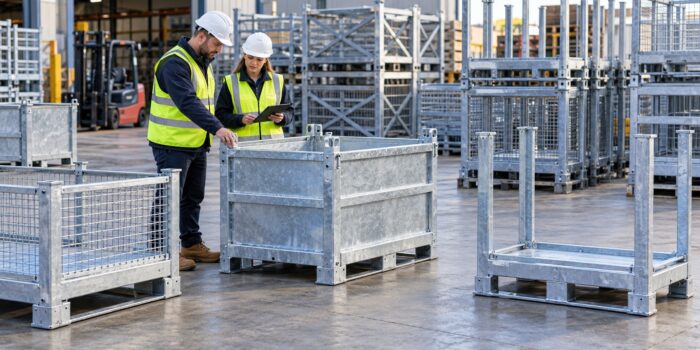
Renting roll cages gives UK businesses the ability to scale their transit equipment fleet up or down without the capital outlay of buying. Whether you are managing a seasonal peak, fulfilling a short-term contract, or testing a new distribution route, rental removes the risk of being locked into equipment you may not need year-round.
Modern logistics is defined by its unpredictability. One month your warehouse operates at a steady pace; the next, a surge in orders or a new contract leaves your team struggling to keep up. When demand spikes, the pressure on your equipment is immediate — and buying a full fleet of new assets is a capital commitment that rarely makes sense for short-term needs.
The Financial Logic: OpEx vs. CapEx
For many procurement and warehouse managers, the decision to rent versus buy comes down to the balance sheet. Purchasing a fleet of several hundred roll cages is a major capital expenditure (CapEx). It requires a significant upfront investment, which can tie up cash flow that might be better spent on marketing, staff recruitment, or technology upgrades.
Renting, however, falls under operational expenditure (OpEx). This allows for much greater financial flexibility. Instead of a large, one-off hit to the budget, you have a predictable, manageable monthly cost. This is particularly beneficial for growing businesses that need to preserve their cash reserves while still scaling their physical capacity. Furthermore, rental payments are often fully tax-deductible as a business expense, making it an even more attractive proposition for the savvy financial director.
Managing the “Peak Season” Problem
In the UK, the “Golden Quarter”—the period leading up to Christmas—is the ultimate test for any logistics operation. Black Friday, Cyber Monday, and the December rush create a massive, temporary demand for transit equipment. If you buy enough roll cages to handle your December peak, you will likely find that half of them sit idle and gather dust in a corner of the warehouse from February to September.
This idle equipment isn’t just a waste of money; it’s a waste of space. Storing hundreds of unused cages takes up valuable square footage that could be used for revenue-generating stock. Renting roll cages solves this dilemma perfectly. You can scale your fleet up in November and return the equipment in January. You only pay for the capacity you are actually using, and you never have to worry about where to store “off-season” equipment. This “elastic” approach to equipment management is the secret to staying lean and profitable in a competitive market.
Flexibility for Short-Term Projects and Contracts
Not every logistics need is permanent. Perhaps you have secured a six-month contract with a new client, or you are managing a one-off office relocation. You might even be testing a new warehouse layout or a different distribution route. In these scenarios, committing to a permanent purchase is risky.
Rental agreements provide the freedom to experiment. If a project requires a specific type of cage—such as a 4-sided security cage for high-value goods or a 3-sided cage for easy picking—you can rent exactly what you need for that specific duration. If the project ends or the requirements change, you simply swap or return the equipment. This agility allows your business to say “yes” to new opportunities without the fear of being left with redundant assets if the contract isn’t renewed.
The Maintenance Advantage: Let Us Handle the Upkeep
One of the most overlooked costs of owning a fleet is maintenance. Over time, roll cages suffer from bent A-frames, broken hinges, and seized castors. If you own the equipment, the responsibility (and the cost) of repairing these units falls entirely on you. You need a dedicated maintenance budget, a relationship with a repair centre, and the administrative time to track which units are out of service.
When you rent from Distribution Maintenance, the maintenance burden is removed from your shoulders. We pride ourselves on the quality of our rental fleet. Every unit that leaves our facility has been inspected and serviced by our expert engineers. We ensure that the wheels roll smoothly, the gates lock securely, and the frames are structurally sound.
If a rented unit develops a fault through standard wear and tear, it is our job to ensure it is fixed or replaced. This “worry-free” aspect of renting allows your warehouse team to focus on moving stock rather than fixing broken trolleys. You get the benefit of a high-performing fleet without any of the mechanical headaches.
Supporting Sustainability and the Circular Economy
Sustainability is no longer a “nice-to-have” in the British business landscape; it is a core requirement. Customers and stakeholders are increasingly looking at the environmental impact of supply chains. Manufacturing new steel equipment is an energy-intensive process that requires significant raw materials.
Renting is, by its very nature, a more sustainable model. It promotes the “circular economy,” where assets are shared, reused, and refurbished rather than disposed of. When equipment is rented, its lifecycle is maximised. A single roll cage might serve five different businesses over its lifetime, being professionally maintained and repaired between each contract. This reduces the total demand for new manufacturing and keeps steel in the loop for longer. By choosing to rent, your business is actively contributing to a more sustainable, less wasteful logistics sector.
Storage Efficiency and Warehouse Flow
As we have discussed in previous blogs, warehouse space is one of the most expensive assets a business has. Every square metre of floor space should be dedicated to high-turnover inventory or efficient picking paths. A graveyard of broken or unused roll cages is an operational disaster.
Renting ensures that your warehouse flow remains optimised. You have exactly the number of cages you need for your current throughput. When a cage is no longer needed, it goes back to us, not into a dark corner of your facility. This prevents the “clutter creep” that often leads to workplace accidents and slower picking times. A tidy warehouse is a safe and efficient warehouse, and renting is the easiest way to maintain that discipline.
Choosing the Right Rental Partner
Not all rental services are equal. When you are looking for a partner for renting roll cages, you should look for a company with a proven track record in both supply and maintenance. You need a partner who understands that a delivery delay of 24 hours can cause a massive backlog in your distribution centre.
Key factors to consider include:
- Quality of Stock: Are the cages modern and well-maintained?
- Range of Equipment: Do they offer 2-sided, 3-sided, and 4-sided options to suit different tasks?
- Response Time: How quickly can they scale your fleet up if you have an unexpected surge?
- Support: Do they offer on-site or off-site repair services to keep the fleet moving?
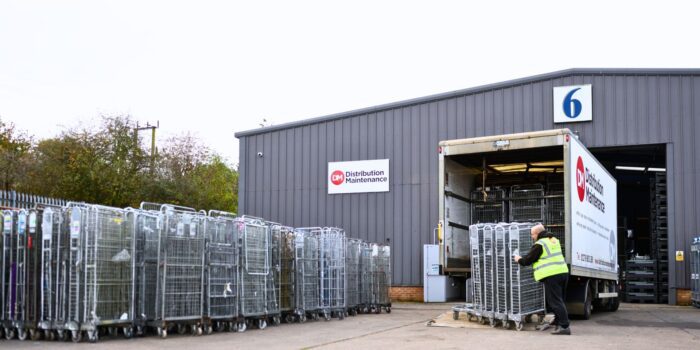
At Distribution Maintenance, we have been supplying and repairing roll cages since 1982. Our rental fleet is maintained to the same standard as our repair work — every unit inspected before dispatch, every castor and gate checked. We operate nationwide from two depots (Harlow and Grantham), and our 12,000 sq ft repair facility means we can turn around a faulty unit fast. For businesses that need both supply and ongoing maintenance under one roof, we are the natural choice.
Conclusion: A Strategic Asset for 2026 and Beyond
The goal of any logistics operation is to move goods from point A to point B as safely and efficiently as possible. While owning your equipment has its place, the modern business landscape often demands a more flexible approach. Renting roll cages provides the perfect middle ground: professional-grade equipment, zero maintenance stress, and the ability to scale your operations up or down at a moment’s notice.
Whether you are preparing for a massive seasonal peak, starting a new short-term contract, or simply looking to preserve your capital for other areas of growth, renting is a smart, sustainable, and strategic choice. It allows you to stay agile in an unpredictable world, ensuring that your wheels keep rolling no matter what the market throws at you.
FAQ
What is the difference between renting and buying roll cages?
Buying is a capital expenditure — a large upfront cost that ties up cash. Renting is an operational expense: a predictable monthly cost with no ownership commitment. Renting also removes the maintenance burden, since the rental provider is responsible for keeping the fleet serviceable.
How long can I rent roll cages for?
Rental contracts are flexible. We offer short-term contracts for seasonal peaks and project-based work, and longer-term arrangements for businesses that want the benefits of rental on an ongoing basis. Contact us on 01279 883 286 to discuss your specific requirement.
What types of roll cages are available to rent?
We supply a range of roll cage sizes and specifications, including 2-sided, 3-sided and 4-sided A-frame cages, security cages for high-value goods, and laundry cages for linen operations. Contact us to confirm current availability.
What happens if a rented cage is damaged?
Normal wear and tear is covered — that is part of the service. If a unit develops a fault through standard use, we replace or repair it. Damage caused by misuse or accidents is handled case by case; we will always discuss this with you transparently rather than billing without notice.
Can I rent roll cages at short notice?
Yes. We hold a large, readily available fleet and can respond to immediate support requirements. Call 01279 883 286 and we will confirm what we can provide and when.
Is your business ready to scale for the next peak? Contact Distribution Maintenance today to discuss our flexible rental options and find the perfect equipment solution for your needs.