The Supermarket Supply Chain Under Pressure in 2026
Every UK supermarket supply chain is under strain in 2026 — not from a single shock like 2020’s lockdown stockpiling, but from three overlapping pressures: sticky food inflation, extreme-weather disruption to fresh produce, and a wave of distributor consolidation. Retailers that diversify sourcing, tighten inventory visibility, and invest in reliable in-store handling equipment are weathering it best.
Key takeaways:
- UK food inflation ran at 4.4% through 2025 — well above the long-term 2.7% average — keeping cost pressure on every link of the chain.
- Extreme weather in southern Spain and Morocco caused sporadic UK shortages of berries, avocados and peppers in early 2026, exposing how fragile fresh-produce routes still are.
- Deloitte’s 2026 Retail Industry Outlook found 66% of retail executives plan to restructure supply chains this year through onshoring, nearshoring, or supplier diversification.
- Only 40% of grocery companies report optimal inventory levels, per the SPS Commerce 2026 Demand Report — most are still over- or under-stocked.
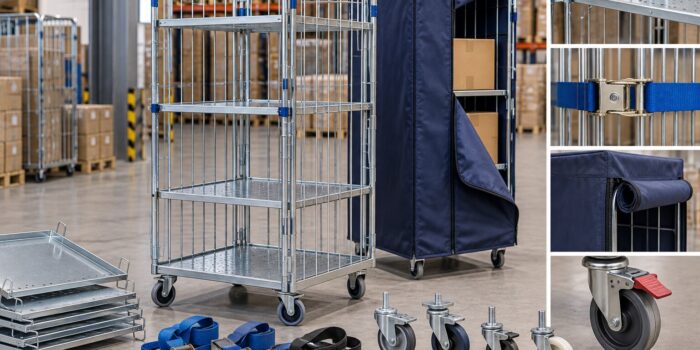
- Reliable, well-maintained roll cages, pallet cages and racking remain one of the simplest ways supermarkets keep stock moving efficiently once it reaches the depot or store.
What Is a Supermarket Supply Chain?
A supermarket supply chain is the full network of suppliers, distribution centres, transport and in-store handling that moves food and goods from producer to shelf. It covers sourcing, warehousing, last-mile delivery and reverse logistics, and its efficiency directly determines shelf availability and price. According to the Tokio Marine HCC UK Retail Sector Report (February 2026), UK retailers are currently navigating a subdued economic backdrop alongside easing-but-still-elevated container freight costs, which keeps supply chain resilience a board-level priority.
Related entities that shape a modern grocery supply chain include distribution centres (DCs), third-party logistics (3PL) providers, cold chain logistics, and in-store material handling equipment such as roll cages and pallet cages.
What’s Straining Supply Chains in 2026
1. Persistent Food Inflation
Food inflation eased from its 2022–23 peak but hasn’t gone away. Savills reported UK food inflation at 4.4% through 2025, and UK headline CPI rose to 3.4% in December 2025 — still well above the Bank of England’s 2% target. That keeps pressure on suppliers, hauliers and retailers all at once, at a time when margins in grocery are already thin. It’s a very different driver to the panic-buying spike Statista tracked during the 2020 lockdowns, but the underlying lesson is the same — sudden demand or cost shifts expose whichever part of the chain has the least spare capacity.
2. Weather-Driven Shortages
In February 2026, weeks of heavy rain across southern Spain and Morocco disrupted harvests, and UK supermarkets including Tesco, Asda and Sainsbury’s reported sporadic shortages of strawberries, raspberries, avocados and peppers. Climate volatility is increasingly hitting the growing calendars that UK fresh-produce sourcing depends on, and retailers are leaning harder on contingency sourcing to fill the gaps.
3. Distributor Consolidation and Sourcing Shifts
Mergers among distributors are forcing grocers into repeated supplier onboarding, EDI re-mapping, and renegotiated contracts — work that manual systems can’t keep pace with. At the same time, Deloitte’s research shows most retail executives are actively rebuilding their sourcing footprint this year rather than waiting out the volatility.
4. Inventory Visibility Gaps
Getting stock levels right remains surprisingly hard: the SPS Commerce 2026 Demand Report found only 40% of grocery companies have optimal inventory, while 45% are carrying too much. Poor integration between ERP and warehouse management systems is a major contributor.
How Supermarkets Are Responding
- Diversifying suppliers across regions to reduce exposure to any single growing area or distributor.
- Building contingency sourcing plans so a weather event in one country doesn’t empty UK shelves.
- Tightening in-store and depot logistics — reliable roll cages, pallet cages and racking keep stock moving efficiently once it clears the supply-chain bottlenecks upstream.
- Investing in data visibility between ERP, WMS and supplier systems to close the inventory-accuracy gap.
“Supply chain resilience in 2026 is less about predicting the next shock and more about building a network that can absorb one without shelves going empty.” — reflects the consensus across recent UK retail sector reporting from Tokio Marine HCC and Deloitte’s 2026 Retail Industry Outlook.
How Distribution Maintenance Helps Keep Supply Chains Moving
Whatever is driving the pressure upstream — inflation, weather, or supplier changes — the equipment moving stock through your depot and store still needs to work every day. As one of the UK’s leading suppliers of reconditioned roll cages, Distribution Maintenance keeps supermarkets and their suppliers stocked with safe, reliable roll cages, ready for high-volume periods.
We also supply new roll cages, rack guard protectors, tote boxes and thermotainers, with volume discounts and orders ready within 24 hours in most cases. If your existing fleet is showing wear rather than needing replacing, our roll cage repair services and roll cage rental options offer a faster, lower-cost way to keep stock flowing during peak demand — without the capital outlay of buying new.
If returns volumes are also rising as part of this pressure, our guide on using pallet cages to organise reverse logistics and our piece on scaling supply chain capacity without buying new stock cover practical next steps.
Frequently Asked Questions
What is a supermarket supply chain?
A supermarket supply chain is the network of suppliers, distribution centres, transport and in-store handling that moves goods from producer to shelf, covering sourcing, warehousing, delivery and returns.
Why are UK supermarket supply chains under pressure in 2026?
The main drivers are persistent food inflation (4.4% through 2025), weather-related disruption to fresh produce sourcing from southern Europe and North Africa, and distributor consolidation forcing repeated supplier onboarding.
How can supermarkets make their supply chains more resilient?
By diversifying suppliers across regions, building contingency sourcing plans, improving inventory data visibility, and keeping in-store/depot handling equipment like roll cages and racking reliable and well-maintained.
Do equipment issues really affect supply chain performance?
Yes — even with sourcing sorted, a shortage of working roll cages or pallet cages at the depot or store slows replenishment and can create shelf gaps that look like a supply problem but are really a handling-capacity problem.
Is renting or repairing roll cages better than buying new during a demand spike?
It depends on how long the spike will last. Renting or repairing suits short-term surges; buying new suits sustained, long-term volume growth. See our roll cage rental guide for a fuller comparison.