What Is a Cage Trolley? Nestable, Demountable and Jumbo Types Explained
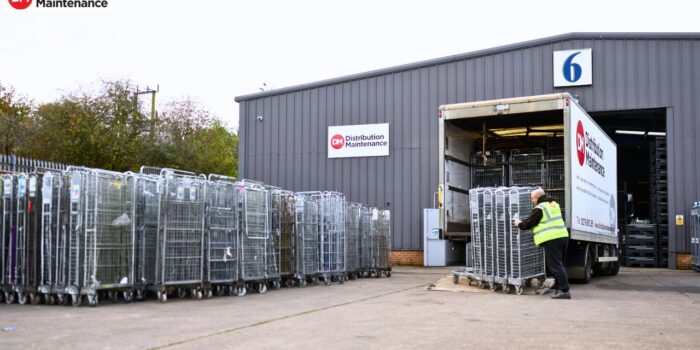
A cage trolley is a wheeled steel container used to move, store and transport goods in warehouses, distribution centres and retail operations. The term is often used interchangeably with “roll cage” — both refer to the same family of equipment: a rigid frame on four castors with mesh or rod infill on some or all sides, and a gate or door for loading and unloading.
The differences that matter when choosing a cage trolley are the frame type (A-frame nestable or fixed), the number of sides, the gate configuration, and the castor specification. This guide covers each in detail.
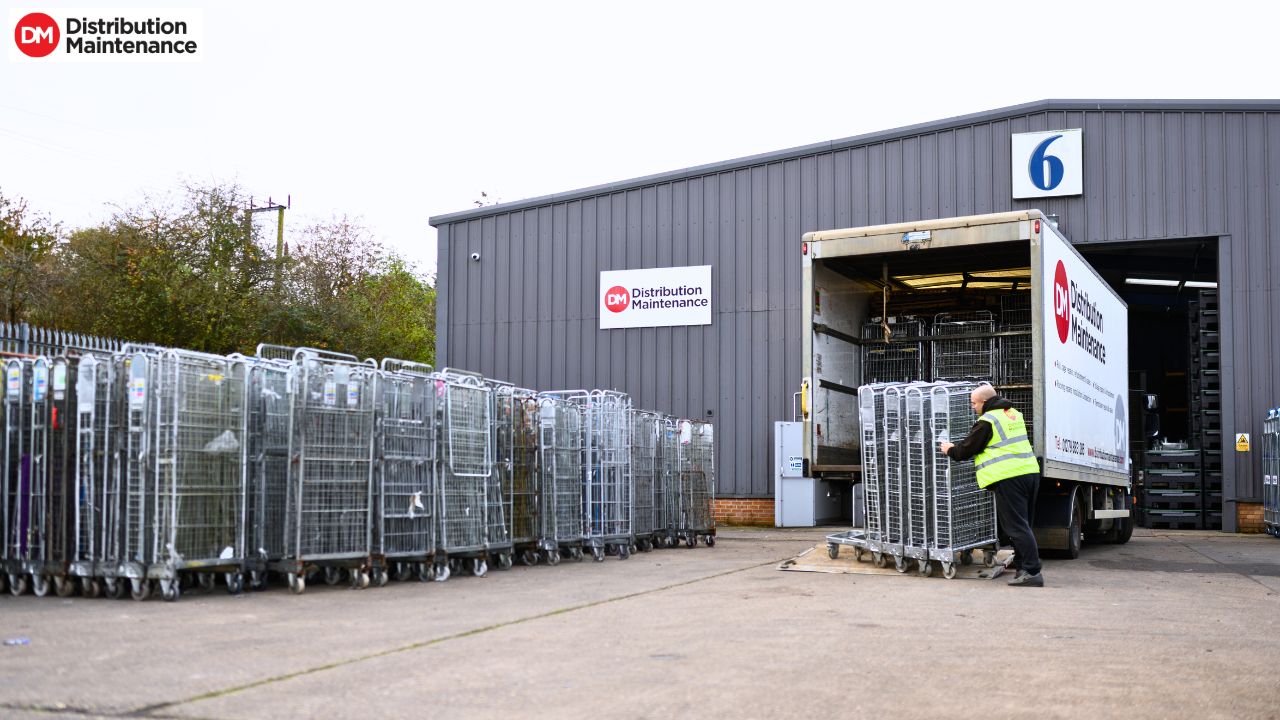
What types of cage trolley are available?
Nestable A-frame cage trolley (3-sided)
The most widely used cage trolley in UK retail and distribution. The A-frame base allows empty cages to nest inside each other — multiple units fit into the space one upright cage occupies, cutting return transport costs and empty cage storage space significantly.
The open front gives staff fast access to the load during replenishment. Stock is picked at the distribution centre directly into the cage, the cage travels on the delivery vehicle, and staff replenish shelves directly from it at the store.
Used by: supermarkets, wholesalers, food distributors, general retail.
4-sided A-frame cage trolley
The same A-frame nestable base, with all four sides enclosed and a drop-down or hinged front gate. The additional panel keeps the load more secure during transit — useful for loose or irregular goods that could fall through the open front of a 3-sided cage.
Used by: operations with loose, irregular or fragile loads.
Full security A-frame cage trolley
A completely enclosed cage trolley with a locking front gate — four mesh sides plus a locking mechanism. The tight mesh infill prevents opportunistic access even when the cage is left unattended on a loading bay or delivery vehicle.
Used by: operations transporting alcohol, tobacco, electronics, cosmetics and pharmaceuticals — any goods with a high resale value where transit theft is a risk.
Laundry cage trolley
A specialist cage trolley designed for linen handling in hotels, hospitals and industrial laundries. Key differences from a standard A-frame:
- Rod infill rather than wire mesh — smooth surface prevents snagging on delicate textiles
- Plastic or steel base — plastic bases run quieter and resist moisture from damp linen
- Part-height front gate with fixed lower panel — keeps loose linen inside even when the gate is open, preventing spills onto the floor
Used by: hotels, hospitals, industrial laundries and linen services.
What is the difference between a cage trolley and a roll cage?
There is no meaningful difference — the terms are used interchangeably in the UK. “Roll cage” is the more common term in retail and distribution; “cage trolley” is used more broadly across logistics, manufacturing and hospitality. Both refer to the same type of equipment: a wheeled steel cage on four castors.
In some product catalogues, “cage trolley” specifically refers to lighter, nestable units for retail replenishment, while “roll cage” can include heavier fixed-frame units for industrial use. If you are unsure which specification you need, contact us and we will confirm the right unit for your operation.
What to consider when choosing a cage trolley
Load capacity. Every cage trolley has a stated Safe Working Load (SWL). Check the specification for the specific model — do not rely on a general estimate. Overloading is the most common cause of frame damage and castor failure.
Nesting. A-frame cage trolleys nest when empty, significantly reducing return transport costs and storage space. If your operation runs regular vehicle returns or has limited cage storage, nesting is a key practical advantage. Fixed-frame cages do not nest and are better suited to static storage roles.
Gate configuration. A drop-down front gate gives fast access for picking and replenishment. A swing gate with a lock is required for high-value goods. A removable gate provides full front access for loading awkward items.
Castor specification. Standard cage trolleys use 125mm, 4-bolt fitting castors. For noise-sensitive environments — hotels, hospitals, retail sales floors — 160mm rubber castors run significantly quieter and handle surface transitions better. Braked castors are required on loading bays and slopes.
Number of sides. A 3-sided cage is faster to load and unload. A 4-sided cage keeps the load more secure. A full security cage adds a locking mechanism. Choose based on the goods you are transporting and the security requirements of your route.
New or refurbished cage trolleys?
New cage trolleys are the right choice when standardising a new fleet, when consistent specification is required across multiple sites, or when certifiable condition is needed for food, pharmaceutical or healthcare operations.
Refurbished cage trolleys have been stripped, inspected and rebuilt to working standard — worn components including castors, hinges and mesh panels replaced. A refurbished unit performs to the same functional standard as a new one at a lower cost. Distribution Maintenance refurbishes cage trolleys at our 12,000 sq ft Grantham facility, with every unit checked before dispatch.
View our new cage trolleys and refurbished cage trolleys.
Cage trolley maintenance
A cage trolley in daily use is subject to significant wear. The most common faults are seized castors, broken hinges, bent frames and damaged gate latches. Addressing these promptly keeps the fleet safe and prevents premature replacement.
Quarterly inspection checklist:
- Castors — spin freely, no flat spots, no debris in the bearing
- Gates and hinges — open, close and latch without forcing
- Frame — no bent uprights, no cracked welds
- Mesh or rod infill — no broken wires that could catch hands or goods
Any cage trolley that fails an inspection should be taken out of service until repaired. Distribution Maintenance carries out cage trolley repairs at our facilities in Harlow and Grantham, and our mobile engineers attend sites across the UK.
FAQ
What is a cage trolley?
A cage trolley is a wheeled steel container used in warehouses, distribution centres and retail operations to move, store and transport goods. It runs on four castors and has mesh or rod infill on some or all sides, with a gate or door for loading and unloading. The term is used interchangeably with “roll cage” in most UK distribution and retail contexts.
What is the standard cage trolley size in the UK?
Standard A-frame cage trolleys are approximately 820mm wide x 720mm deep x 1,790mm high. This footprint is sized to pass through standard store doors and fit standard service lifts. Dimensions may vary slightly between manufacturers — contact us to confirm current stock specifications.
What is the difference between a nestable and a fixed-frame cage trolley?
A nestable A-frame cage trolley has a base chassis that allows empty units to nest inside each other, reducing the space required for storage and return transport. A fixed-frame cage is welded into a permanent structure — it does not nest, but is more rigid and better suited to heavy static storage roles where nesting is not required.
How much weight can a cage trolley hold?
This varies by model and specification. Contact us with your load requirements and we will confirm the right specification for your operation.
Can you repair cage trolleys we already own?
Yes. We carry out cage trolley repairs at our facilities in Harlow and Grantham, and our mobile engineers attend sites across the UK. Common repairs include castor replacement, hinge fitting, gate realignment and frame welding.
Do cage trolleys need maintenance?
Yes. Regular inspection of castors, gates, hinges and frame integrity catches developing faults before they become safety hazards. A cage trolley with a seized castor or misaligned gate is both a handling hazard and a slower piece of equipment.