Warehouse Trolleys: Stock Trolleys, Picking Trolleys and Order Pickers Compared
Every shift in a busy warehouse depends on moving goods short distances, over and over: from goods-in to racking, from racking to packing, from packing to dispatch. A warehouse trolley is the simplest tool for that job. But “warehouse trolley” covers very different equipment, and picking the wrong one slows staff down and raises the risk of strains and falls.
This guide compares the three types most UK sites use: stock trolleys, picking trolleys and order pickers (including the order picking platform). For each one, we cover how it is built, what it carries and where it fits best. A side-by-side table and a short buying checklist follow, so you can match the trolley to the task.
What Is a Stock Trolley?
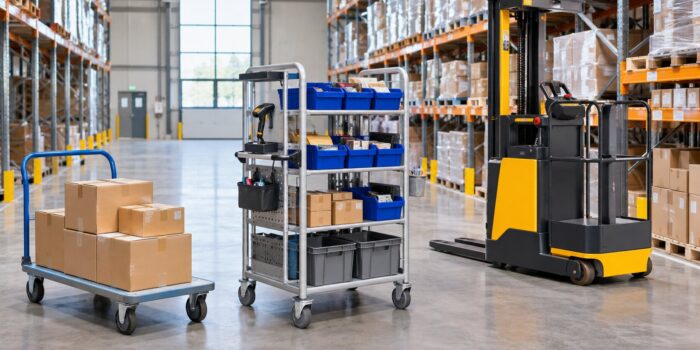
A stock trolley is a general-purpose trolley for moving bulk goods around a warehouse, stockroom or shop floor. It is built for volume and weight, not for picking single items.
Typical design:
- A flat deck, or two to three fixed shelves, in steel or heavy-duty plastic
- A push handle at one or both ends
- Four castors, usually two swivel and two fixed, often with brakes
- Optional mesh sides or a cage frame to keep loads secure
Where stock trolleys are used:
- Moving deliveries from goods-in to storage
- Replenishing shelves and pick faces
- Carrying boxed stock between zones or buildings on the same site
- Shop-floor restocking in retail back rooms
When loads need to be enclosed or loaded onto delivery vehicles, a roll cage often does the job better than an open stock trolley. See our guide to roll cages in the UK: types, sizes and where to buy.
What Is a Picking Trolley?
A picking trolley is built for order picking: walking the aisles and collecting individual items for several orders at once. Where a stock trolley moves bulk, a picking trolley keeps small quantities separated and easy to reach.
Typical design:
- Several shelves or tiers set at waist height to reduce bending
- Space for totes, crates or bins, one per order
- A tall handle, sometimes with a clipboard, scanner or label holder
- Light, easy-rolling castors for frequent stops and turns
Where picking trolleys are used:
- Multi-order (batch) picking in e-commerce and spare-parts warehouses
- Pharmacy, retail and click-and-collect picking
- Moving totes between pick faces and packing benches
For a deeper look at the different designs, read What Is a Picking Trolley? Types and Warehouse Uses.
What Is an Order Picker?
An order picker lets staff pick from shelves above normal reach. In a warehouse, the term covers two kinds of equipment.
1. Order picking platform (manual). This is a wheeled set of steps with a guarded top platform and a tray or shelf for picked items. The operator pushes it into place, locks it, climbs up and picks. Most models have spring-loaded castors or a brake that stops the unit moving once someone stands on it.
2. Powered order picker. This is a battery-powered truck that carries the operator, either at low level (picking from the bottom racking levels onto a pallet) or on a rising platform for higher levels. It suits large sites with long pick routes and full-pallet volumes, but it needs trained operators and a bigger budget.
Where order pickers are used:
- Picking from upper shelving and racking levels
- Spare-parts and archive stores with tall shelving
- Retail stockrooms where stock is stored above head height
Any picking above floor level falls under the Work at Height Regulations 2005. Platforms should have handrails, anti-slip treads and a brake or lock, and staff should be shown how to use them.
Stock Trolley vs Picking Trolley vs Order Picker
| Feature | Stock trolley | Picking trolley | Order picker / picking platform |
|---|---|---|---|
| Main job | Moving bulk stock | Collecting items for several orders | Reaching items stored up high |
| Load type | Boxes, cartons, heavy items | Small items in totes or bins | Single items or small cartons |
| Working height | Floor to waist | Waist level | Upper shelves and racking |
| Mobility | Pushed, four castors | Pushed, light-rolling castors | Pushed (platform) or powered |
| Best for | Goods-in, replenishment, stockrooms | E-commerce, pharmacy, parts picking | Tall shelving, high-level picking |
| Training needed | Basic manual handling | Basic manual handling | Work-at-height or truck training |
Always check the safe working load on the product label or spec sheet; it varies by model and castor rating.
How to Choose the Right Warehouse Trolley
Start with the task, not the trolley. These five questions narrow the choice quickly:
- What are you moving? Bulk cartons point to a stock trolley; mixed small items for several orders point to a picking trolley.
- How heavy is a full load? Match the safe working load to your heaviest realistic load, with a margin. The Manual Handling Operations Regulations 1992 expect you to reduce pushing and lifting strain where you can.
- How high is the stock? If staff regularly reach above shoulder height, add an order picking platform instead of using makeshift steps.
- What floors will it run on? Smooth concrete suits nylon castors; rough yards or ramps need larger polyurethane or rubber wheels.
- Does it leave the building? If goods go onto vehicles or between sites, a roll cage or cage on wheels is usually safer than an open trolley.
Other equipment trolleys worth knowing
- Roll cages: enclosed, nestable trolleys for distribution and retail delivery.
- Milk trolleys and dollies: compact bases for moving stacked crates or totes.
- Supermarket cages: used for store replenishment; see supermarket cages for retail replenishment.
- Pallet cages and stillages: for storing and moving heavier or bulkier items by forklift; see pallet cages: types, sizes and load capacities.
Keeping Warehouse Trolleys in Good Condition
Most trolley problems start at the wheels. A seized or flat-spotted castor makes a trolley harder to push, pulls it off line and puts extra strain on the operator.
- Check castors, brakes and handles weekly on high-use trolleys
- Clear wrapped film, strapping and debris from wheel housings
- Take bent frames or cracked shelves out of use until repaired
- Replace worn castors as a set so the trolley rolls evenly
Repairing or refurbishing a fleet is often cheaper than replacing it. Distribution Maintenance offers on-site cage fitting and assembly and wheel and castor repairs, and supplies new, used and refurbished trolleys and cages across the UK.
Need warehouse trolleys for your site? Browse our trolley range and add items to your quote list, or contact our team for advice on the right mix of stock trolleys, picking trolleys and roll cages.
Frequently Asked Questions
What is the difference between a stock trolley and a picking trolley?
A stock trolley carries bulk goods, such as full cartons, from one area to another. A picking trolley holds several totes or bins at waist height, so one picker can collect items for multiple orders on a single route.
What weight can a warehouse trolley carry?
It depends on the frame and castors. Light picking trolleys carry less than heavy-duty steel stock trolleys. Always check the safe working load stated by the supplier and never exceed it.
Is an order picking platform the same as a ladder?
No. An order picking platform has a guarded top platform, handrails and a brake or lock that holds it still once someone steps on. That makes it safer than a ladder for repeated picking at height.
Which castors are best for a trolley in a warehouse?
Nylon castors roll easily on smooth concrete floors. Polyurethane or rubber wheels are quieter and grip better on uneven surfaces and ramps. Braked castors help on loading areas and slopes.
Can damaged warehouse trolleys be repaired?
Yes. Castors, handles, shelves and welded joints can usually be repaired or replaced. Refurbishing a trolley fleet often costs less than buying new and keeps equipment in service for longer.