What Is a Metal Stillage? Steel Specs, Stacking Limits and Uses
When a load is too heavy, too awkward or too valuable for a plastic crate or a cardboard box, UK manufacturers and warehouses turn to steel. Metal stillages carry engine parts, tyres, castings, sheet metal and returns through factories and distribution centres every day, and many of them stay in service for decades.
But not every metal stillage is built the same. Steel gauge, finish, base design and stacking feet all change what a stillage can carry and how high it can be stacked. This guide explains the specifications to check, the main types available, safe stacking limits and the industries that rely on them.
What Is a Metal Stillage?
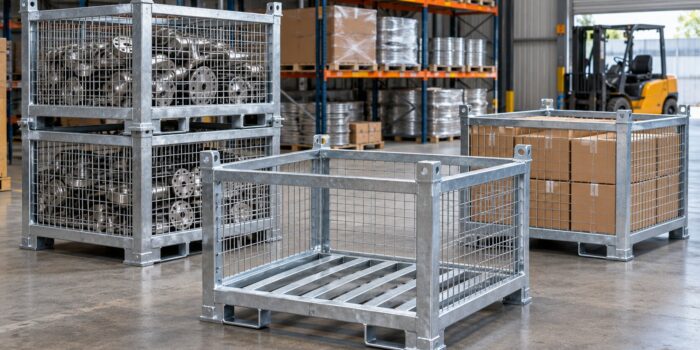
A metal stillage is a steel storage and transport unit with a raised base, so a forklift or pallet truck can lift it, and a frame, mesh or solid sides that hold the load. Most are designed to stack on top of each other when full, which saves floor space in a warehouse or yard.
Compared with other options:
- Plastic stillages are lighter and easier to clean, but carry less weight and are less resistant to heat and impact.
- Wooden pallets and crates cost less up front but break, splinter and need replacing far more often.
- Roll cages have castors for pushing by hand; a metal stillage is usually moved by forklift and built for heavier, static storage.
For an overview of all stillage types, including plastic and timber, see our guide to stillages: types, sizes and uses. If you are deciding between a stillage and a pallet cage, read stillage cage vs pallet cage.
Metal Stillage Specifications: What to Check
The specification decides what a stillage can carry, how long it lasts and where it can be used. Check these five points on any quote or data sheet.
1. Steel construction. Frames are usually mild steel box section, tube or angle, with a steel sheet or mesh base. Welded mesh sides keep the load visible and let air through; solid sheet sides contain small or loose parts.
2. Finish.
- Zinc plated: good for indoor use at a lower cost.
- Hot-dip galvanised: the most durable choice for yards, outdoor storage and wet areas.
- Powder coated or painted: useful for colour coding by customer, line or product.
3. Footprint and height. Most metal stillages match standard pallet footprints, such as 1200 x 1000 mm (UK) or 1200 x 800 mm (Euro), so they fit racking, trailers and pallet trucks. Height depends on the load and the stacking needs.
4. Load rating. Rated safe working loads vary widely by design, from a few hundred kilograms for light mesh units to well over a tonne for heavy-duty steel stillages. The rating should be marked on the stillage or stated by the supplier; never estimate it.
5. Handling and access features.
- 2-way or 4-way forklift entry
- Stacking feet or cups that locate on the unit below
- Drop-down or half-drop front gates for loading by hand
- Folding or removable sides and posts to save space when empty
Types of Metal Stillages
| Type | Design | Best for |
|---|---|---|
| Mesh stillage | Steel frame with welded wire mesh sides | Visible, ventilated storage of parts and components |
| Box (solid) stillage | Solid steel sheet sides and base | Small, loose or oily parts; swarf and offcuts |
| Post pallet stillage | Steel base with removable corner posts | Long, bulky or irregular loads; stacking without full sides |
| Collapsible stillage | Sides fold down onto the base | Return journeys and seasonal storage where empty space matters |
| Tyre stillage | Open frame or rack sized for tyres | Tyre storage and transport in automotive and fleet sites |
| Custom stillage | Built to fit a specific part | Automotive and manufacturing lines with fixed components |
Many sites use a mix: mesh stillages on the production line, collapsible units for returns, and post pallets for oversized items. For storing steel pallets and cages more generally, see metal cages and pallets.
Stacking Limits and Safe Use
The stacking limit is set by the bottom stillage: it must carry its own load plus the full weight of every unit above it. That is why each design has a maximum stack height, which must come from the manufacturer or supplier, not from what fits under the roof.
Safe stacking rules:
- Never exceed the rated stack height or the safe working load per unit
- Stack only identical, compatible stillages so the feet locate properly
- Stack on firm, level floors; reduce the height outdoors or on slopes
- Put the heaviest loads at the bottom and spread weight evenly inside each unit
- Never stack on a stillage with bent feet, cracked welds or a distorted frame
- Keep loads inside the stillage, below the top of the sides
Inspection. Under the Provision and Use of Work Equipment Regulations 1998 (PUWER), work equipment must be kept in good repair and inspected where damage could cause danger. A simple routine works: a quick visual check before use, and a recorded inspection at regular intervals. Take damaged units out of service until they are repaired.
If your stillages are stored in pallet racking, the racking itself needs checking too. Our guide to racking inspection in the UK explains how often and what to look for.
Where Metal Stillages Are Used
- Automotive: engine parts, body panels, glass and tyres moved between suppliers and assembly lines, often in custom stillages.
- Manufacturing and engineering: work-in-progress storage, castings, machined parts and raw materials beside production lines.
- Distribution and retail: consolidating stock, storing returns and moving goods between sites. See how stillages support returns and reverse logistics.
- Construction and building supplies: bagged products, fixings and heavy materials stored in yards.
- Recycling and waste: collecting scrap metal, offcuts and segregated waste streams.
In each case the benefit is the same: a steel unit that protects the load, stacks to save space and survives years of forklift handling.
New, Refurbished or Repaired?
Steel’s biggest advantage is that it can be repaired. A bent foot, broken mesh panel or cracked weld rarely means the whole stillage is scrap.
- Buy new when you need a specific size, a custom design for a production part, or a large matched fleet.
- Buy refurbished when standard sizes work and budget matters; a properly refurbished steel unit is checked, repaired and refinished before resale.
- Repair existing units when the frame is sound but parts are damaged. It is usually quicker and cheaper than replacement and keeps steel out of the scrap stream.
Before you buy, it helps to know what to ask a supplier about load ratings, lead times and after-sales support. Our guide on choosing a stillage supplier in the UK lists the key questions.
Need metal stillages or steel cages for your site? Distribution Maintenance supplies new and refurbished steel storage equipment, including new pallet cages and the refurbished heavy duty pallet cage, and repairs damaged units through our pallet cage repair and on-site repair services. Contact our team for a quote.
Frequently Asked Questions
How much weight can metal stillages hold?
It depends on the steel section, base and design. Light mesh units are rated for a few hundred kilograms, while heavy-duty steel stillages can carry over a tonne. Always use the safe working load marked on the unit or given by the supplier.
How high can you stack metal stillages?
Only as high as the manufacturer’s rated stack height allows. The limit depends on the load in each unit and the strength of the bottom stillage, and it should be reduced on uneven or outdoor ground.
Are metal stillages better than plastic stillages?
Metal stillages carry heavier loads, resist heat and impact, and can be repaired. Plastic stillages are lighter, quieter and easier to wash, which suits food and pharmaceutical sites with lighter loads.
What is the difference between a stillage and a steel pallet?
A steel pallet is a flat base for carrying loads. A stillage adds sides, posts or a frame that hold the load in place, and most stillages are designed to stack when full.
Can damaged metal stillages be repaired?
Yes. Bent feet, broken mesh, damaged gates and cracked welds can usually be repaired. Units should be taken out of use until a competent person has repaired and checked them.