Protecting Your Parts and Your People: The Safety Advantages of Plastic Containers
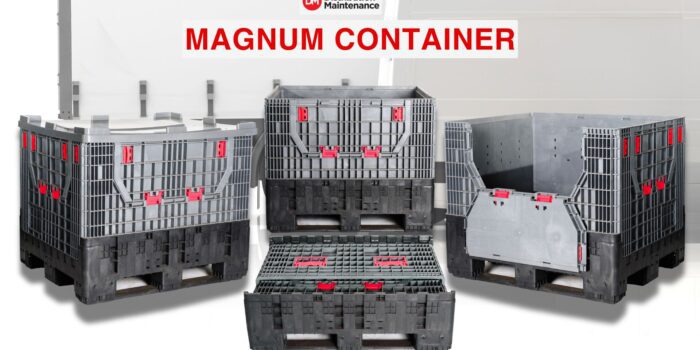
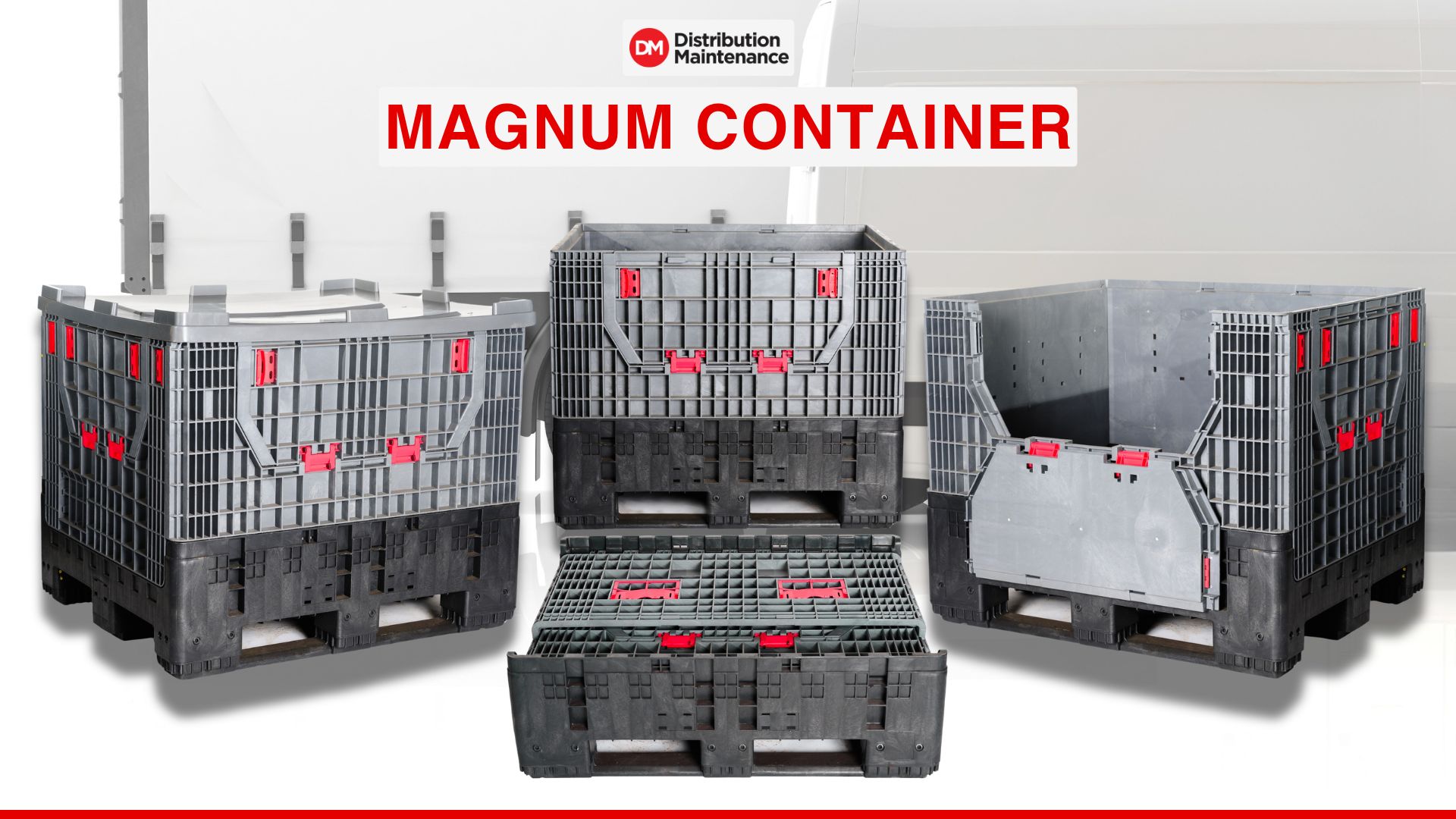
A Magnum container is a collapsible, heavy-duty plastic bulk storage container used across manufacturing, automotive, food production and pharmaceutical logistics. Designed to hold loads of up to 500kg, it folds flat when empty — cutting return transport costs significantly compared to fixed steel stillages or wooden crates.
Distribution Maintenance supplies both brand-new and refurbished Magnum containers to UK businesses. For operations that move large volumes of components, parts or finished goods, the shift from wood and steel to plastic is driven by four practical advantages: weight, hygiene, durability and cost. This guide explains each one.
The Problem with Traditional Wood
Wood has been used in logistics for centuries because it is cheap and accessible. However, in a high-tech manufacturing environment, wood often creates more problems than it solves. One of the biggest issues is physical safety. Wood splinters easily under pressure or when hit by a forklift. These splinters can damage sensitive components or, worse, cause injuries to staff members.
Unlike wooden packaging, a Magnum container requires no ISPM 15 treatment — it can cross international borders without fumigation or heat treatment, saving time and cost on every shipment.
Furthermore, wood is an organic material. This means it can harbour pests, such as wood-boring insects. For companies involved in international shipping, this is a major hurdle. You have to follow strict ISPM 15 regulations, which require wooden packaging to be heat-treated or fumigated. This adds a layer of cost and administrative stress to every shipment.
Additionally, wood is porous. It absorbs moisture, oil, and chemicals. If a liquid leaks in a warehouse, a wooden pallet or crate will soak it up, making it nearly impossible to clean. This creates a hygiene risk, especially in food or medical manufacturing. In contrast, a plastic Magnum container is non-porous. It does not splinter, and it is completely immune to pests. This makes it a much safer and cleaner option for any facility.
Plastic vs. Steel: The Weight Advantage
Steel is the traditional heavy-duty choice for industrial storage. There is no denying that steel stillages are incredibly strong. However, that strength comes with a significant weight penalty. A steel container is much heavier than its plastic counterpart.
In logistics, weight equals money. Every extra kilogram on a lorry increases fuel consumption. If you are moving thousands of units, the “tare weight” (the weight of the empty container) becomes a major financial factor. Because Magnum containers are made from high-density polyethylene (HDPE), they are significantly lighter than steel. Consequently, you can fit more actual product on a vehicle before hitting weight limits. This reduces the number of journeys required, which lowers both your fuel bill and your carbon footprint.
Manual handling is another area where weight matters. While these containers are usually moved by forklifts, staff still need to interact with them. A lighter container is easier to slide, position, and fold. This reduces the physical strain on your team and lowers the risk of workplace injuries.
Durability Without the Corrosion
Many people assume that plastic is “weaker” than steel. While steel has higher ultimate tensile strength, the Magnum container is engineered specifically for the rigours of a factory floor. It is designed with reinforced ribs and a sturdy base that can handle loads of up to 500kg or more.
A standard steel stillage of comparable capacity typically weighs 60–90kg empty. A Magnum container in the same size class weighs around 25–35kg. On a full lorry load, that difference translates directly into more product per journey and lower fuel cost per unit moved.
Unlike steel, plastic does not rust. In many manufacturing environments, equipment is exposed to moisture, cleaning chemicals, or outdoor loading bays. Steel containers require constant painting and treatment to prevent corrosion. Once rust sets in, the structural integrity of a steel stillage is compromised.
However, a Magnum container stays structurally sound even in damp environments. It can be pressure-washed daily without any risk of damage. This durability ensures that the container remains safe to use for many years. When a container lasts longer, your return on investment improves significantly.
Efficiency Through Design: The Folding Mechanism
One of the standout features of the Magnum container is its collapsible design. This is a massive advantage over fixed-frame steel stillages or wooden crates. In most logistics cycles, there is a “return leg” where empty containers must be sent back to the start of the chain.
If you use fixed containers, you are essentially paying to transport air. An empty steel container takes up the same space as a full one. This is incredibly inefficient. Conversely, the Magnum container can be folded down when empty. Typically, you can stack several folded containers in the space of one upright unit.
Most Magnum container designs fold to approximately one-quarter of their upright height. On a standard trailer, this means you can return four times as many units per journey compared to a fixed-frame equivalent.
This folding mechanism allows you to fit many more empty units on a single return lorry. Consequently, you spend less on transport and use fewer vehicles. Similarly, when the containers are not in use in your warehouse, they can be folded and tucked away. This frees up valuable floor space for production activities.
Hygiene and Cleanliness
Modern manufacturing, especially in the “clean” sectors like electronics or pharmaceuticals, requires high levels of cleanliness. Dust and debris are the enemies of high-quality production. Because wooden crates create dust and splinters, they are often banned from cleanroom environments.
Steel can also be problematic if the paint begins to flake or peel. These small flakes of paint can contaminate products or clog machinery. The Magnum container solves these issues. It is made from a single type of durable plastic that does not flake, peel, or produce dust.
Because the surfaces are smooth, they do not trap dirt. If a container gets dirty, a quick wash with a hose or an industrial crate washer makes it look new again. This ease of cleaning is a major reason why the food and beverage industry has moved away from traditional materials in favour of the Magnum.
Brand New vs. Refurbished: Making the Right Choice
At Distribution Maintenance, we understand that every business has a different budget. That is why we offer both brand new and refurbished Magnum containers.
Buying brand new units ensures that you have a perfectly uniform fleet with the maximum possible lifespan. New units are ideal for long-term projects where you want to standardise your logistics equipment.
However, our refurbished units offer fantastic value for money. These are pre-owned containers that have been carefully inspected by our engineers. We check the folding mechanisms, the gates, and the structural integrity of the base. Any damaged parts are replaced, and the unit is cleaned and tested.
A refurbished Magnum container provides the same operational benefits as a new one but at a lower price point. This is a great way for growing businesses to scale up their fleet without a massive capital outlay. Furthermore, choosing refurbished equipment is a more sustainable choice, as it keeps existing plastic in the supply chain for longer.
Maintenance and Repairs
Even the toughest container can be damaged in a busy warehouse. A forklift might accidentally clip a side panel, or a gate might get caught. The beauty of the Magnum container is that it is often modular. Many parts can be replaced or repaired.
We offer professional repair services for Magnum containers at our 12,000 sq. ft facility. We can fix broken latches, replace side walls, and ensure the folding mechanism works perfectly. By repairing your fleet instead of scrapping it, you save money and reduce waste. We recommend regular inspections to catch small issues before they become safety hazards.
Conclusion
The transition from wood and steel to plastic Magnum containers is driven by pure logic. Plastic offers the hygiene of a medical-grade tool with the strength of an industrial workhorse. By eliminating splinters and pests, you protect your staff and your products. By reducing weight, you lower your transport costs.
Whether you are looking for a small batch of brand new units or a large fleet of refurbished containers, Distribution Maintenance can help. We have been supporting the logistics and manufacturing industries since 1982. We know what it takes to keep a supply chain moving smoothly.
FAQ
What is a Magnum container?
A Magnum container is a collapsible heavy-duty plastic bulk container used in manufacturing, automotive, food production and logistics. It is designed to hold loads up to 500kg and folds flat when empty, reducing return transport costs significantly.
What is the weight capacity of a Magnum container?
Standard Magnum containers handle loads of up to 500kg. The exact capacity depends on the specific model and base type. Contact us with your load requirement and we will confirm the right specification.
How does a Magnum container compare to a steel stillage?
A Magnum container is significantly lighter than a steel stillage of comparable capacity — typically 25–35kg versus 60–90kg. It does not rust, requires no paint maintenance, and can be pressure-washed daily. The folding mechanism also reduces return transport costs. Steel stillages have higher tensile strength, but for most industrial uses the Magnum provides equal practical performance at lower total cost.
Do you sell refurbished Magnum containers?
Yes. We inspect, repair and test refurbished Magnum containers at our 12,000 sq ft Grantham facility. Folding mechanisms, gates and base integrity are all checked before dispatch. Refurbished units provide the same operational benefits as new at a lower price point.
Can Magnum containers be repaired?
Yes. The Magnum container is largely modular — side panels, gates and latches can be replaced individually. We carry out repairs at our Grantham facility. Regular inspection and timely repair extends container life significantly and is more cost-effective than replacement.
Are plastic containers suitable for food and pharmaceutical applications?
Yes. HDPE plastic is non-porous, does not harbour pests, and can be pressure-washed with standard industrial cleaners. Unlike wooden crates, it does not require ISPM 15 treatment for international shipment. It is widely used in food, pharmaceutical and cleanroom environments for these reasons.
Are you ready to upgrade your bulk storage? Click here to view our range of Magnum containers and request a quote for your facility today.