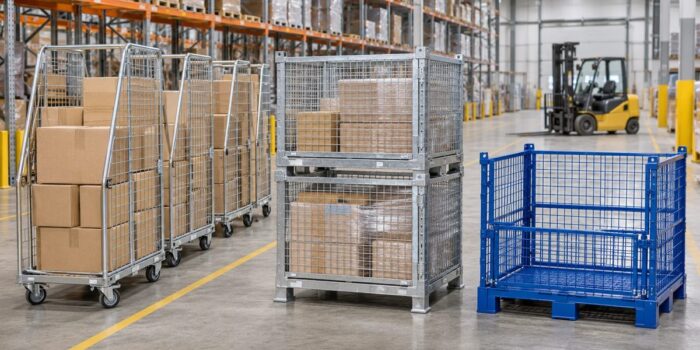
Stillage Repair and Refurbishment: What Is Involved and When to Repair
Stillage repair means fixing damaged stillages, such as bent feet, distorted bases, broken gates and cracked welds, so they can carry and stack loads safely again. Repairing or refurbishing stillages usually costs much less than buying new ones and keeps your fleet the same size and colour. Distribution Maintenance repairs and refurbishes all types of stillages.
Key takeaways
- Bent feet, distorted bases, damaged mesh, broken gates and cracked welds are the most common stillage faults
- UK law requires work equipment to be kept in good repair, so damaged stillages should come out of use
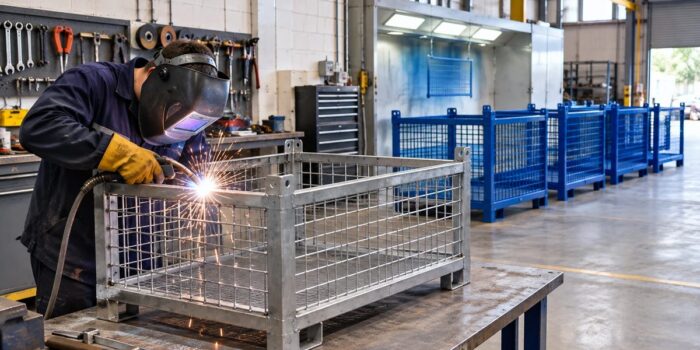
- Refurbishment includes strip-down, welding, new parts, rust removal and a full respray in any colour
- Minor repairs can be done on site; welding and refurbishment are done at our Harlow and Grantham repair centres
What is stillage repair?
Stillage repair is the work of restoring a damaged stillage to a safe working condition by straightening, welding or replacing its damaged parts. A repair fixes specific faults, while a full stillage refurbishment strips the whole unit down, repairs it, replaces worn parts and resprays it.
Stillages take heavy loads, forklift handling and stacking every day, so damage builds up over time. Our stillage and pallet cage repair service covers both repairs and full refurbishment.
What damage do stillages commonly suffer?
The most common stillage damage is bent feet and legs, distorted bases from forklift impacts, damaged mesh panels, broken gates and drop-down fronts, missing locking pins and cracked welds. Most of it comes from forklift contact, overloading and dropping stillages during handling.
- Bent or broken feet and legs, which stop stillages stacking level
- Distorted bases from forklift impacts and overloading
- Damaged or torn mesh panels
- Broken or misaligned gates and drop-down fronts
- Missing or damaged locking pins on folding stillages
- Cracked welds and rust on the frame
Is it safe to keep using a damaged stillage?
No. A damaged stillage should be taken out of use until it is repaired. Under regulation 5 of the Provision and Use of Work Equipment Regulations 1998, employers must keep work equipment “in an efficient state, in efficient working order and in good repair” (PUWER 1998, regulation 5).
HSE guidance is to “never use faulty or damaged equipment” and to have a way for workers to report it (HSE, maintenance of work equipment). Stillages are often stacked several high, and a stillage with bent feet or a distorted base may not sit squarely on the one below, so a stack can lean and fall. Mark damaged stillages clearly and keep them apart until they are inspected.
Should you repair, refurbish or replace a stillage?
Repair a stillage when it has one or two faults on an otherwise sound frame, refurbish it when it is old or worn throughout, and replace it when the frame cannot be repaired safely. Repair and refurbishment usually cost less than new stillages, especially across a fleet.
| Option | What it covers | When to choose it |
|---|---|---|
| Repair | Fixing the damaged parts: welds, feet, gates, mesh panels or pins | One or two faults on an otherwise sound stillage |
| Refurbishment | Strip-down, structural repair, new components, rust removal and a full respray | Older or worn fleets you want back to a like-new working condition |
| Replace | A new or refurbished stillage | A frame that cannot be repaired safely, or when you need more units |
What happens during stillage refurbishment?
Stillage refurbishment follows six stages: strip-down and assessment, structural repair, component replacement, surface preparation, spray finishing and a final quality check. The aim is to return each stillage to a clean, safe working condition, so it can carry and stack its rated load again.
- Strip-down and assessment: every component is inspected before work starts
- Structural repair: frame welding, base repair and gate realignment
- Component replacement: mesh panels, pins, hinges and other worn parts
- Surface preparation: rust removal, cleaning and priming
- Spray finishing: a full respray in our purpose-built spray booth
- Quality check: every stillage is checked before it is stored or returned
Can stillages be resprayed in your company colours?
Yes. Our spray booth can respray stillages in any RAL colour or your company colour as part of refurbishment. Colour makes your stillages easy to identify in shared sites and at customer locations, and a fresh paint finish protects the steel against rust.
- Ownership: stillages in your colour are easier to spot and less likely to go missing
- Colour-coding: different colours for products, departments, routes or temperature zones
- Identification: add engraved ID plates with your company name, a fleet number or the safe working load
Should stillages be repaired on site or at a repair centre?
Minor stillage faults such as gate realignment or pin replacement can be repaired on your site, while welding, full refurbishment and respraying are done at a repair centre with workshop equipment. Many fleets use both, depending on how badly each stillage is damaged.
Our drop-off repair centres are in Harlow, Essex and Grantham, Lincolnshire, and open Monday to Friday, 07:30 to 15:30. Equipment is logged, assessed and stored under cover until it is ready to collect, and our on-site repair engineers travel across the UK.
What affects the cost of stillage repair?
The cost of stillage repair depends on how badly each stillage is damaged, whether it needs a repair or full refurbishment, how many stillages are in the batch, whether you want a respray, and whether the work is done on site or at a repair centre.
- How badly each stillage is damaged
- Repair of specific faults or a full refurbishment
- The number of stillages in the batch
- Whether you want a respray, and in what colour
- On-site work or a repair centre
Send us photos and the number of stillages, and we will give you a quote.
How can you reduce stillage damage?
You can reduce stillage damage by loading within the safe working load, handling stillages carefully with forklifts, stacking them only on level ground, inspecting them regularly and repairing small faults before they spread. Small repairs done early cost less than major ones later.
- Load within the safe working load marked on each stillage
- Enter and lift with forks fully under the base, and avoid pushing stillages with the fork tips
- Stack only on level ground and only to the height the manufacturer allows
- Inspect stillages regularly and report damage straight away
- Read our guide to metal stillages, specifications and stacking limits
Stillage repair FAQs
Can damaged stillages be repaired?
Yes. Bent feet, distorted bases, broken gates, damaged mesh panels, missing pins and cracked welds can usually be repaired. Stillages that are old or worn throughout can be fully refurbished, which includes structural welding, new parts, rust removal and a full respray in your chosen colour.
Is it cheaper to repair stillages than to buy new ones?
In most cases, yes. Repairing or refurbishing stillages costs less than buying new ones, especially across a whole fleet. Replacement only makes sense when a frame cannot be repaired safely or when you need extra units for a growing operation.
How long does stillage repair take?
It depends on the damage, the number of stillages and whether they need a repair or full refurbishment. Send us photos and the number of units, and we will confirm a timescale with your quote. Larger batches can be planned around your collection and delivery schedule.
Can you respray stillages in our company colour?
Yes. Our spray booth can respray stillages in any RAL colour or company colour as part of refurbishment. A fresh paint finish also protects the steel from rust and makes your stillages easier to identify in shared sites and at customer locations.
Do you repair stillages on site?
Minor repairs, such as gate realignment and pin replacement, can be done on your site. Welding, full refurbishment and respraying are done at our repair centres in Harlow and Grantham, which have the welding stations, spray booth and spare parts stock that this work needs.
Should a damaged stillage still be used?
No. Take a damaged stillage out of use until it is repaired. UK law requires work equipment to be kept in good repair, and a damaged stillage may not stack safely or carry its rated load. Mark it clearly and keep it apart until it is inspected.
Summary
Damaged stillages should come out of use and be repaired or refurbished before they cause an accident. Repair and refurbishment cost less than replacement and can include a respray in your colours. See our stillage repair service and guide to warehouse cages, or contact us on 01279 883 286 for a quote.
Last updated: 17 November 2026