Mesh Cages: Types, Uses and How to Choose the Right One
A mesh cage is a steel container with welded wire mesh sides, used to store, move and protect goods while keeping them visible and ventilated. The most common mesh cages are roll cages on castors, and pallet cages and stillages moved by forklift. This guide explains the types, sizes, load ratings and how to choose the right mesh cage.
Key takeaways
- A mesh cage keeps goods contained while staff can see and count them through the mesh
- The main types are mesh roll cages, wire mesh pallet cages, mesh stillages and lockable security cages
- Our mesh roll cages carry up to 500kg; our pallet cages and stillages range from 500kg to 1,500kg
- UK law requires work equipment, including cages, to be kept in good repair, so damaged mesh cages should come out of use
What is a mesh cage?
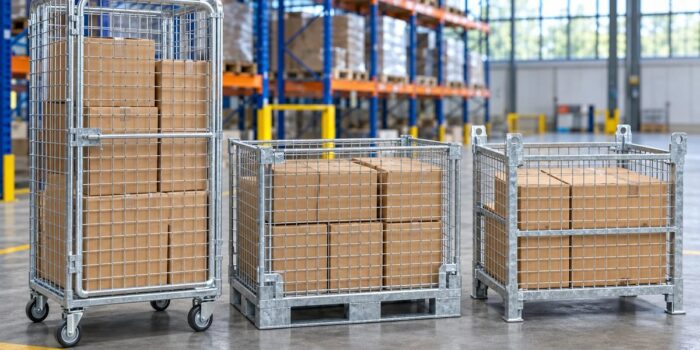
A mesh cage is a rigid steel frame fitted with welded wire mesh panels on some or all sides, with a gate or drop-down front for loading. A mesh cage either runs on castors and is pushed by hand, or sits on a pallet-style base and is lifted by forklift or pallet truck.
“Mesh cage” and “wire mesh cage” mean the same thing. Most mesh cages are made from galvanised or painted steel, which resists rust in damp loading bays and cold stores. The frame and base carry the load; the mesh keeps the goods in place.
Why use a mesh cage instead of a solid container?
A mesh cage is better than a solid container when you need to see, ventilate or secure goods without unloading them. The open mesh lets staff check contents at a glance, lets air move through the load, and weighs less than solid steel sheet of the same size.
- Visibility: staff can count stock and check contents through the mesh, without unloading the cage
- Ventilation: air moves through the load, which suits fresh produce, laundry and goods that must not sweat
- Security: a lockable mesh cage keeps goods secure while they stay visible to staff and cameras
- Cleaning: open mesh is easier to wash down and lets water drain away
- Weight: mesh panels use less steel than solid sheet, so the empty cage is lighter to move
What types of mesh cage are there?
The four main types of mesh cage are mesh roll cages, full security roll cages, wire mesh pallet cages and mesh stillages. They differ in how they move, their footprint and how much weight they carry, so the right type depends on whether goods travel by hand, by forklift or on delivery vehicles.
| Type | How it moves | Typical size | Load capacity | Best for |
|---|---|---|---|---|
| Mesh roll cage | On castors, pushed by hand | 737 x 860 x 1,676mm (our new A-frame cages) | 500kg | Store deliveries, picking and replenishment |
| Full security mesh roll cage | On castors | Same footprint as a standard A-frame cage | 500kg | High-value stock in transit |
| Wire mesh pallet cage | Forklift or pallet truck | 1200 x 1000mm or 1200 x 800mm base | 500kg to 1,500kg | Storage, racking and bulk transport |
| Mesh stillage | Forklift or pallet truck, stackable | 1200 x 1000mm or 1200 x 800mm base | 500kg to 1,500kg | Manufacturing parts and work in progress |
Sizes and loads are for the cages Distribution Maintenance supplies. Always check the safe working load on the cage itself before you load it.
What mesh size do mesh cages use?
Mesh cages for general goods commonly use a 50 x 50mm mesh, which holds cartons and packaged goods securely. Our A-frame roll cages use 50 x 50mm mesh infill. Smaller loose items need a tighter mesh or a cage liner, so they cannot fall through the openings.
Laundry cages often use rod infill instead of mesh, because rods are easier to clean and do not catch on fabric. Whatever the infill, the strength of a mesh cage comes from its frame, base and welds. A cage with a bent base or cracked weld can fail under load even if the mesh looks fine. Liners and covers are available as roll cage accessories.
How much weight can a mesh cage hold?
A mesh cage holds as much as its rated safe working load, which depends on the type. Our mesh roll cages are rated to 500kg, and our wire mesh pallet cages and stillages range from 500kg for a Euro folding cage to 1,500kg for a heavy duty cage.
The Health and Safety Executive notes that a fully loaded roll cage may weigh 500kg or more, and that roll cages are typically 1,550mm to 1,830mm tall while most operators cannot see over 1,400mm (HSE, roll cages and wheeled racks). Load heavy items low, keep the load below the operator’s eye line, and move one cage at a time.
Where are mesh cages used?
Mesh cages are used wherever goods need to be moved or stored in bulk while staying visible. The biggest users are retail distribution, warehousing, manufacturing, and laundry and hospitality, where mesh roll cages and pallet cages carry stock between sites, stores and production lines.
- Retail distribution, moving stock from depot to store and onto the shop floor
- Warehouses, for order picking, storage and returns
- Manufacturing, holding components and work in progress next to the line
- Hotels, hospitals and laundries, moving linen
- Secure storage of tools, spares and high-value stock
How do you choose the right mesh cage?
Choose a mesh cage by how it will move, the footprint you need, the heaviest load it must carry, how secure the goods must be, and how the empty cage will be returned. Working through these five points in order narrows the choice to one or two types.
- Decide how it will move: castors for moving by hand through stores and depots, or a forklift base for racking and trailers
- Match the footprint: 1200 x 1000mm or 1200 x 800mm for pallet cages and stillages, so they fit your pallets and racking
- Check the load: pick a safe working load above your heaviest normal load
- Decide on security: choose a full security cage with a lockable gate for valuable goods
- Plan empty returns: nesting roll cages and folding pallet cages take up less room on the way back
How do you keep mesh cages safe and in good repair?
Keep mesh cages safe by checking them regularly and taking damaged ones out of use until they are repaired. Under regulation 5 of the Provision and Use of Work Equipment Regulations 1998, employers must keep work equipment “in an efficient state, in efficient working order and in good repair” (PUWER 1998, regulation 5).
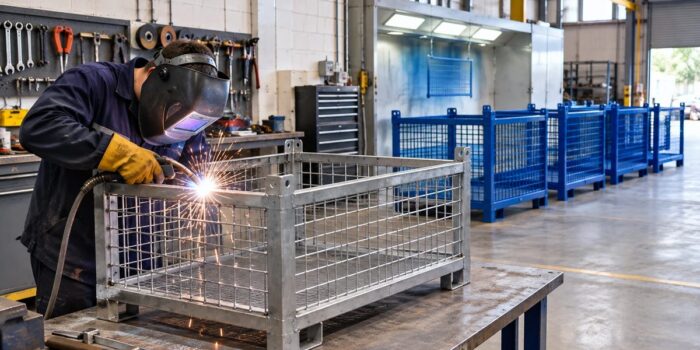
HSE guidance is to “never use faulty or damaged equipment” and to have a way for workers to report it (HSE, maintenance of work equipment). Check castors, mesh panels, welds, gates and bases. Damaged cages can be repaired on your site or at our drop-off repair centres in Harlow and Grantham, which usually costs far less than buying new.
Mesh cage FAQs
What is a mesh cage used for?
A mesh cage is used to store and move goods while keeping them visible, ventilated and secure. Common uses include store deliveries in roll cages, warehouse picking and returns, storing components beside a production line, and moving linen in hotels and hospitals. The open mesh lets staff check what is inside without unloading the cage.
Is a wire mesh cage the same as a mesh cage?
Yes. A wire mesh cage and a mesh cage are the same thing: a steel frame with welded wire mesh panels. The terms are used for mesh roll cages, wire mesh pallet cages and mesh stillages alike. Some suppliers also call them wire cages or mesh containers, but they describe the same type of equipment.
How much weight can a mesh cage hold?
It depends on the type and its safe working load. Our mesh roll cages are rated to 500kg, and our pallet cages and stillages range from 500kg to 1,500kg. Always check the safe working load marked on the cage before loading it, and never load above it.
What size mesh does a roll cage have?
Many roll cages, including our A-frame cages, use a 50 x 50mm mesh. This holds cartons and packaged goods securely. For small loose items that could fall through the openings, use a cage liner or choose a cage with a tighter mesh.
Are mesh cages better than solid boxes?
Mesh cages are better when you need to see, ventilate or quickly count goods, and they weigh less than solid steel boxes. Solid boxes are better for very small loose items, liquids or goods that need full protection from dust and dirt.
Can a damaged mesh cage be repaired?
Yes. Broken mesh panels, cracked welds, bent bases, damaged gates and worn castors can usually be repaired. Minor faults can be fixed on site, while welding and full refurbishment are done at a repair centre. Repair usually costs far less than buying a new cage.
Summary
Mesh cages keep goods contained, visible and ventilated, which is why they are used across distribution, warehousing and manufacturing. Match the cage to how it will move, the load and the security you need. Browse our new roll cages, refurbished roll cages and pallet cages, or read our guide to stillages. To discuss your requirements, contact us or call 01279 883 286.
Last updated: 17 November 2026