Warehouse Cages Explained: Roll Cages, Stillages and Pallet Cages Compared
Warehouse cages are steel containers used to store, move and protect goods in warehouses and distribution centres. The four main types are roll cages, stillages, pallet cages and cage trolleys. They differ in how they move, how much they carry and how they store when empty. This guide compares them so you can choose the right cage for each job.
Key takeaways
- Roll cages and cage trolleys are pushed by hand on castors; stillages and pallet cages are moved by forklift
- Our roll cages carry up to 500kg; our stillages and pallet cages range from 500kg to 1,500kg
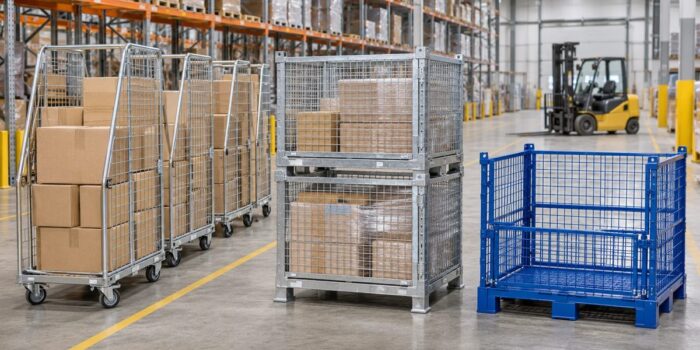
- Stillages stack when loaded, A-frame roll cages nest when empty, and folding pallet cages collapse flat
- Refurbished cages cost less than new and suit fleets that need extra units quickly
What are warehouse cages?
Warehouse cages are steel containers, usually with mesh sides, that hold goods during storage, picking and transport. The main warehouse cages are roll cages, stillages, pallet cages and cage trolleys, and each is built for a different way of moving goods: by hand, by forklift or on delivery vehicles.
Most warehouse cages use galvanised or painted steel frames with welded mesh panels, so goods stay visible and ventilated. Pallet cages and stillages are built to standard pallet footprints so they fit racking and trailers, while roll cages are sized to pass through store doors.
How do the main warehouse cages compare?
The main difference between warehouse cages is how they move. Roll cages and cage trolleys run on castors and are pushed by hand, while stillages and pallet cages sit on a pallet-style base and are lifted by forklift or pallet truck. The table compares their sizes, loads and empty storage.
| Cage | How it moves | Typical size | Load capacity | Empty storage |
|---|---|---|---|---|
| Roll cage | Pushed by hand on castors | 737 x 860 x 1,676mm (our new A-frame cages) | 500kg | A-frame cages nest together |
| Stillage | Forklift or pallet truck | 1200 x 1000mm or 1200 x 800mm base | 500kg to 1,500kg | Stack when loaded; some fold |
| Pallet cage | Forklift or pallet truck | 1200 x 1000mm or 1200 x 800mm base | 500kg to 1,500kg | Folding types collapse flat |
| Cage trolley | Pushed by hand on castors | Varies by type | Varies by type | Nestable types save space |
Sizes and loads are for the cages Distribution Maintenance supplies. Check the safe working load on each cage before use.
What is a roll cage?
A roll cage is a tall mesh cage on four castors that is pushed by hand. Roll cages move goods from the warehouse onto delivery vehicles and into stores, which makes them the standard warehouse cage for retail distribution and supermarket replenishment.
Our A-frame roll cages come in 3-sided, 4-sided and full security versions, all rated to 500kg on 125mm castors, and they nest together when empty. The HSE notes that roll cages are typically 1,550mm to 1,830mm tall and that a fully loaded cage may weigh 500kg or more (HSE, roll cages and wheeled racks). See our guide to the types of roll cages.
What is a stillage?
A stillage is a steel container on a pallet-style base that is lifted by forklift or pallet truck and stacks on top of other stillages when loaded. Stillages are used in manufacturing and storage to hold components, parts and work in progress beside a production line.
Most UK stillages are built to a 1200 x 1000mm or 1200 x 800mm footprint, with mesh, solid or post sides. Read more about stillage types and sizes and metal stillages.
What is a pallet cage?
A pallet cage is a mesh cage built on a standard pallet footprint, so it fits into pallet racking and onto trailers like a normal pallet while keeping loose or awkward goods contained. Many pallet cages fold flat when empty to save space on return journeys.
Our range runs from a 500kg Euro folding cage to a 1,500kg heavy duty cage with half and full drop-down gates. For the difference between the two, see stillage vs pallet cage.
What are cage trolleys and security cages?
Cage trolleys are smaller hand-pushed cages used for picking and moving stock around a site, while security cages have lockable gates to protect valuable items in storage or in transit. Both are used alongside roll cages in warehouses and stores.
Read our guides to cage trolley types and safety and security cages. For open trolleys used in picking, see our warehouse trolleys guide.
Which warehouse cage do you need for each job?
The right warehouse cage depends on the job: roll cages for moving stock to stores, stillages for storing parts beside a production line, pallet cages for loose goods in racking, and cage trolleys for picking. The table matches common jobs to the best cage.
| Job | Best cage |
|---|---|
| Delivering stock to stores | Roll cage |
| Moving high-value stock | Full security roll cage |
| Storing parts beside a production line | Stillage |
| Storing loose goods in pallet racking | Pallet cage |
| Picking orders around the warehouse | Cage trolley or picking trolley |
| Saving space on empty return journeys | Nesting roll cages or folding pallet cages |
Should you buy new or refurbished warehouse cages?
Buy new warehouse cages when you need a matching fleet built to one specification, and refurbished cages when cost matters or you need extra units quickly. Refurbished cages are repaired, checked and made safe before sale, and they cost less than new ones.
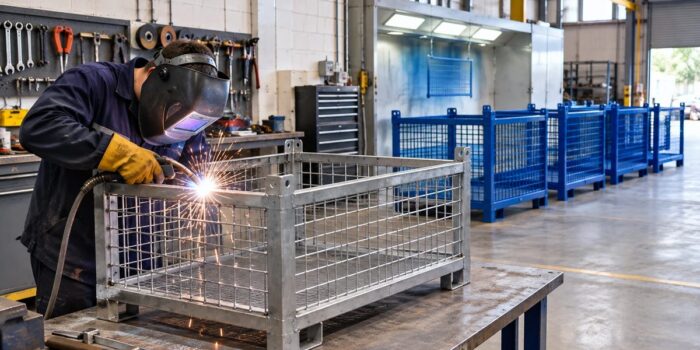
Distribution Maintenance supplies new and refurbished roll cages, pallet cages and stillages, and repairs all of them. Damaged cages can be fixed on your site or at our drop-off repair centres in Harlow and Grantham.
How do you keep warehouse cages safe to use?
Keep warehouse cages safe by loading them correctly, moving them carefully and repairing damage promptly. UK law requires work equipment to be kept “in an efficient state, in efficient working order and in good repair” (PUWER 1998, regulation 5), so damaged cages should come out of use.
- Move one roll cage at a time, at walking pace, and push rather than pull (HSE)
- Put heavier items at the bottom and keep loads below the operator’s line of sight
- Never exceed the safe working load marked on the cage
- Stack stillages and pallet cages only on level ground and only to the height the manufacturer allows; see the HSE’s warehousing and storage guidance (HSG76)
- Check castors, mesh, welds and gates regularly; read our guide to loading a roll cage safely
Warehouse cage FAQs
What are warehouse cages used for?
Warehouse cages are used to store, move and protect goods. Roll cages move stock to stores, stillages and pallet cages hold goods in storage and racking, and cage trolleys move stock around the site during picking and replenishment. Each type is built for a different way of moving goods.
What is the difference between a roll cage and a pallet cage?
A roll cage sits on castors and is pushed by hand, so it suits deliveries and moving stock around stores. A pallet cage sits on a pallet-style base and is moved by forklift or pallet truck, so it suits racking and bulk storage.
What is the difference between a stillage and a pallet cage?
Both sit on pallet-style bases and are moved by forklift. Stillages are built to stack when loaded and often have solid or post sides, while pallet cages usually have mesh sides and many fold flat when empty. Pallet cages also fit easily into pallet racking.
Can warehouse cages be stacked?
Stillages and many pallet cages are designed to stack when loaded, up to the height the manufacturer allows. Roll cages do not stack, but A-frame roll cages nest together when empty to save floor space in the depot and on return journeys.
How much can a warehouse cage hold?
It depends on the type. Our roll cages are rated to 500kg, and our stillages and pallet cages range from 500kg to 1,500kg. Always check the safe working load marked on the cage before you load it, and never exceed it.
Are refurbished warehouse cages worth buying?
Refurbished cages suit businesses that want to cut costs or add units to an existing fleet quickly. They are repaired and checked before sale. New cages suit fleets that need one consistent specification across every unit, such as a brand new distribution contract.
Summary
Roll cages, stillages, pallet cages and cage trolleys each suit a different way of moving goods. Choose by how the cage will move, the load and how it stores when empty. Read our guides to mesh cages, roll cages and pallet cages, or contact us on 01279 883 286 to find the right cage for your operation.
Last updated: 17 November 2026